



IEEE CLOUD features 3 keynotes.
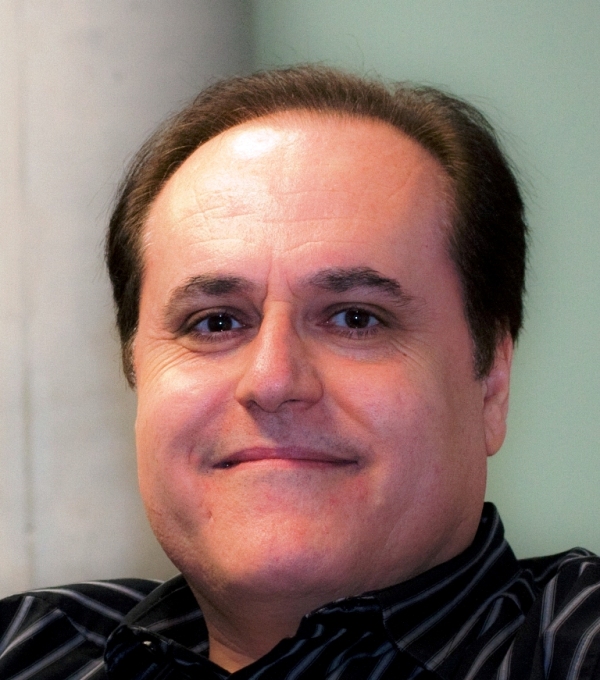
Albert Y. ZOMAYA
University of Sydney
Clinical AI is entering a transformative new era, one driven by the convergence of edge intelligence, distributed clinical systems, and generative AI. This talk examines how these technologies are reshaping the continuum of care, from bedside monitoring to hospital-wide decision support and population-scale surveillance. By moving computation closer to the patient, edge intelligence enables real-time analytics for pain assessment, sepsis detection, imaging triage, and personalised intervention without sending sensitive data to the cloud. Layered with GenAI, these systems can summarise complex clinical signals, generate differential diagnoses, support clinicians with multimodal reasoning, and deliver precise, context-aware recommendations. We explore vivid examples of Clinical AI in action, wearable edge devices that detect deterioration before symptoms manifest, distributed learning networks that link hospitals without moving patient data, and generative models that assist with radiology reports, surgical planning, and patient communication. Together, these capabilities create a more responsive, resilient, and equitable healthcare ecosystem. At its core, this talk argues that Clinical AI must balance technological intelligence with clinical responsibility. By uniting edge computing, generative models, and distributed learning, we are building a patient-centred infrastructure that is faster, safer, and more compassionate, one that brings advanced clinical insights to every clinician, every setting, and every patient.
Speaker Biography
Albert Y. ZOMAYA is the Peter Nicol Russell Chair Professor of Computer Science at the University of Sydney. A global leader in parallel and distributed systems, he has authored more than 800 publications and 30 books, shaping the field’s research agenda for over three decades. He is a Fellow of the IEEE, the Australian Academy of Science, and the Royal Society of New South Wales, and an elected member of Academia Europaea and the European Academy of Sciences and Arts.
Some of Professor Zomaya’s recent awards include the Research Innovation Award, the IEEE Computer Society’s Technical Committee on Cloud Computing (2021), the Technical Achievement and Recognition Award, IEEE Communications Society’s IoT, Ad Hoc, and Sensor Networks Technical Committee (2022), and the Distinguished Technical Achievement Award, IEEE Communications Society’s Technical Committee on Big Data (2024). He previously served as Editor-in-Chief of IEEE Transactions on Computers, IEEE Transactions on Sustainable Computing, and ACM Computing Surveys.
Professor Zomaya is a Clarivate Highly Cited Researcher, and his research interests encompass parallel and distributed computing, networking, machine learning, and complex systems, with a lasting influence on both theory and practice.
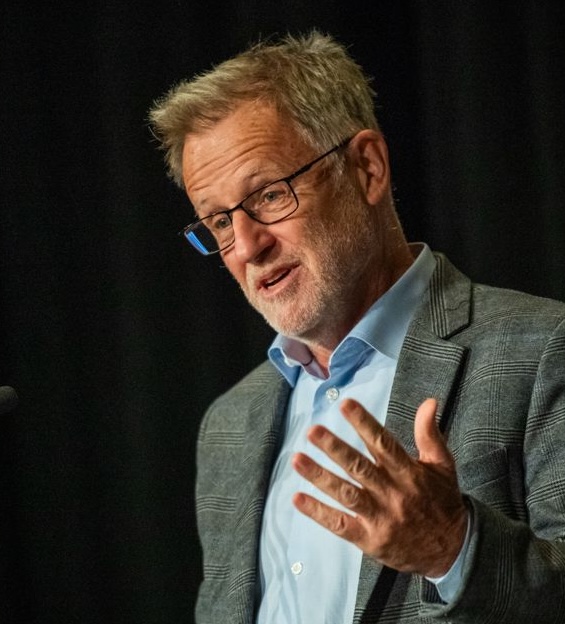
Ian FOSTER
Argonne National Laboratory and the University of Chicago
AI agents are changing what it means to run applications in the cloud. Unlike traditional services, agents are persistent, stateful, and capable of initiating actions, invoking tools, and coordinating with other agents over long time horizons. These behaviors break assumptions embedded in today’s cloud platforms, which are designed around request–response execution, bounded tasks, and known control flow. This talk explores what it means to rethink the cloud for agentic AI. I will identify key system-level challenges—including lifecycle management, resource containment, observability, and governance—and illustrate concrete failure modes such as orphaned agents and opaque long-running behaviors. I will then outline emerging design patterns and architectural directions for cloud platforms that treat agents as first-class workloads. Examples from large-scale scientific computing environments highlight both the opportunities and the open research questions in building cloud systems for autonomous, multi-agent applications.
Speaker Biography
Ian Foster is Senior Scientist and Distinguished Fellow, and director of the Data Science and Learning Division, at Argonne National Laboratory, and the Arthur Holly Compton Distinguished Service Professor of Computer Science at the University of Chicago. He has a BSc degree from the University of Canterbury, New Zealand, and a PhD from Imperial College, United Kingdom, both in computer science. His research is in distributed, parallel, and data-intensive computing technologies, and their applications to scientific problems. He is a fellow of the AAAS, ACM, BCS, and IEEE, and has received the BCS Lovelace Medal; IEEE Babbage, Goode, and Kanai awards; and ACM/IEEE Ken Kennedy award.
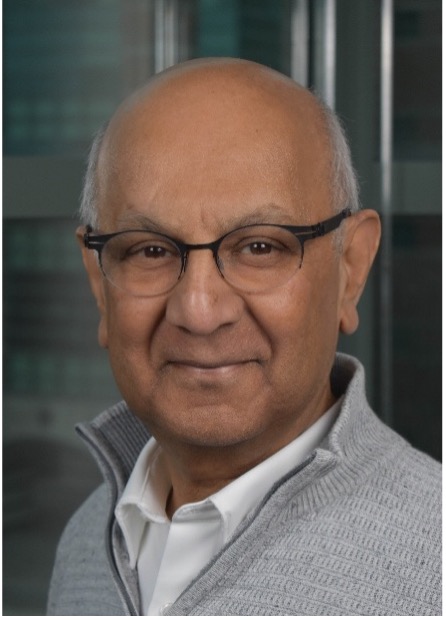
Ravishankar K. Iyer
University of Illinois Urbana Champaign
As AI platforms continue to expand in scale, heterogeneity, and their reliance on proprietary components, application-specific SLO management is indeed a first-class systems and AI challenge. This challenge stems, in part, from the growing incidence of complex soft and hard failures, the intricate cross-layer dependencies of modern stacks, and the overwhelming scale of telemetry data. Existing approaches to SLO assurance and resilience management are demonstrably insufficient, as evidenced by recent major outages of Cloudflare and AWS, which impacted millions around the globe and demonstrated the acute, multifaceted dependencies on massive modern compute and communication infrastructures.
This talk will explore an emergent paradigm that embeds resilience, diagnosis, recovery, and SLO management directly into the AI platform. An important insight is found in several recent studies on the impact of GPU failures on the training and inference of large-scale LLMs, where failures and performance issues can have major economic consequences. To address these issues, future innovations will require a new generation of lean, intelligent, and collaborative agents with active learning for rapid diagnosis and recovery that are directly embedded into the cloud platform and can dynamically adapt to varying application-specific SLOs. Our recent work showcases this idea via rapid diagnosis of complex application-specific performance and reliability failures. Funded by IBM and collaborating with Argonne National Lab, and evolving collaboration with Microsoft and NVIDIA, this talk will highlight some of our experiences and emerging challenges where conventional fault tolerance and mitigation models clearly need significant rethinking to manage the major headline-making failures.
Speaker Biography
Ravishankar K. Iyer is George and Ann Fisher Distinguished Professor of Engineering. He holds joint appointments in the UIUC Departments of Electrical and Computer Engineering and Computer Science, as well as in the Coordinated Science Laboratory (CSL), the National Center for Supercomputing Applications (NCSA), the Carle Illinois College of Medicine, and the Carl R. Woese Institute for Genomic Biology. He is also a faculty Research Affiliate at the Mayo Clinic. Professor Iyer leads the DEPEND Group with a multidisciplinary focus on systems and software that combine deep measurement-driven analytics and machine learning (ML). His award recognized work encompasses applications in two important domains: i) system resilience (that spans reliability and the security of critical infrastructures) and ii) health and personalized medicine. Including the development of AI/ML methods that apply to predictive health-related analytics, both in online and offline analysis. This work brings together statistical analysis with both Bayesian and deep-learning methods, often integrated into joint hardware and software implementations. Working collaboratively with clinicians and medical researchers from large healthcare institutions, his group combines omics and patient-specific data to build predictive machine learning models and algorithms that have been transformational in-patient diagnosis and care.