





Rama Akkiraju
VP, Enterprise AI, NVIDIA, Ex-IBM Fellow
Enterprise AI is transitioning from simple single-LLM flows to complex agentic ecosystems—adaptive systems composed of multiple agents, tools, governed data, human workflows, and organizational policies. This keynote introduces a systems-science framework for designing and managing such ecosystems using principles of modularity, control, feedback, robustness, and socio-technical alignment.
We illustrate these concepts through practical examples drawn from real-world deployments of agentic AI systems within our enterprise—covering problem framing and task decomposition, model and tool selection, governed data access with role-based guardrails, deterministic scaffolding and orchestration, and SLO-driven optimization for quality, latency, and cost.
The framework emphasizes end-to-end observability through logging and tracing, alongside engineered feedback loops—data flywheels—that sustain performance and prevent regression. It also addresses critical failure modes such as brittle retrieval pipelines, unbounded tool execution, model drift, and hidden coupling. We conclude with proven mitigation strategies to help organizations evolve agentic AI from prototype experimentation into dependable, scalable enterprise infrastructure.
Rama Akkiraju is the Vice President of Enterprise AI at NVIDIA, where she leads the AI-at-NVIDIA mission to build agentic AI platforms and AI agents that enhance employee productivity and drive business and operational effectiveness across the enterprise.
Previously, Rama was an IBM Fellow, Master Inventor, and CTO of IBM Watson AIOps. Over her career, she has led the design and development of enterprise AI products spanning generative and agentic AI, machine learning, natural language processing, speech recognition, human-computer interaction, decision support systems, business process management, and semantic web services. Her work has consistently focused on translating advanced AI research into scalable, real-world systems that deliver measurable impact.
A TED AI speaker and W3C standards contributor, Rama has co-authored more than 100 technical papers and holds over 50 issued patents, with additional patents pending. She has received numerous academic and industry honors, including four best paper awards from leading conferences such as INFORMS and AAAI. Her recognitions include Forbes’ Top 20 Women in AI Research, Fortune’s “A-Team in AI,” UC Berkeley’s Athena Award for Technical and Executive Leadership, and AI Industry Leader of the Year from Women Leaders in Data & AI.
Rama holds a master’s degree in computer science and graduated as valedictorian of her MBA program at New York University.
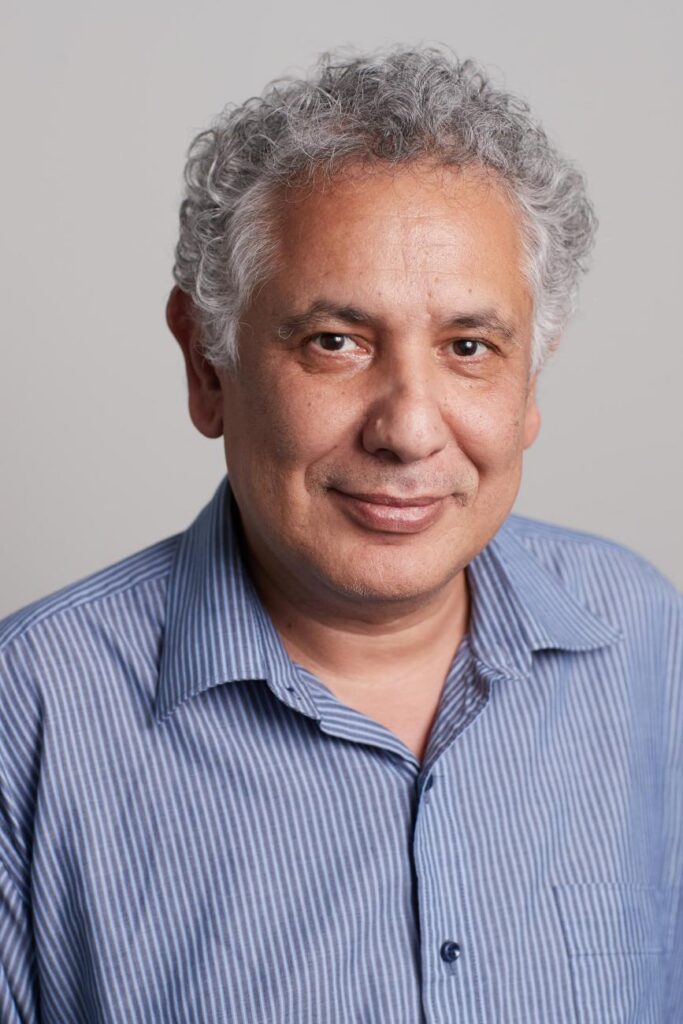
Boualem Benatallah
Dublin City University
AI agents are redefining enterprise and service operations through reasoning, autonomy, and adaptive decision-making. Powered by large language and action models, these agentic systems extend automation beyond static workflows toward goal-driven services that interact with data, tools, and APIs. By leveraging memory and feedback from past interactions, agents can retain knowledge and improve their performance over time.
As these capabilities expand, robust quality control becomes essential. Greater flexibility and automation must be accompanied by safeguards that ensure reliability, trustworthiness, and compliance. In particular, quality control must address multiple stages of agent operation, including the quality of input prompts, the soundness of reasoning processes, and the safety and validity of outputs and actions. Mechanisms such as grounded validation, automated safeguards, structured memory management, and feedback-driven correction help ensure that agentic systems operate predictably at scale.
This talk revisits the abstractions and middleware needed for AI-powered services, highlighting the convergence of service integration, agent memory and knowledge management, multi-agent orchestration, and built-in quality control as foundations for the next generation of adaptive and trustworthy enterprise services.
Prof. Boualem Benatallah is a full professor of computing at Dublin City University (DCU, Ireland) since January 2022. He has had over 21 years as a research leader and academic at UNSW Sydney (Australia), where he served as senior lecturer, associate professor, professor, and Scientia Professor, before joining DCU. He is a Fellow of the IEEE.
His main research interests are in AI-enabled services, process AI, LLM-powered agents, quality control in crowdsourcing and AI services, service-oriented computing, and business process management. He has published more than 350 refereed papers, including more than 100 journal articles. Most of his papers appeared in very selective and reputable conferences and journals. His research attracted a large amount of competitive research funding through national and international grants from both government and industry. He supervised over 40 research students to completion. He was awarded the prestigious IEEE TCSVC Research Innovation Award for contributions to Model-driven Web Services Composition. He has also won multiple best paper awards at prestigious conferences and received the IBM Faculty Award. With his co-authors, he was recognized by IEEE TSE for one of the most influential papers of the journal’s 3rd decade and contributed a retrospective to its 50th anniversary issue in 2025.
Boualem has been the general and PC chair of a number of international conferences and has served as guest editor of several special issues in leading journals. He was a member of the Steering Committee (SC) of the BPM conference. He is the co-chair of the steering committees of the ICSOC and CoopIS conferences and serves on the editorial boards of several prestigious journals including ACM Transactions on the Web, IEEE Transactions on Services Computing, and ACM Computing Surveys. He was a member of the team (comprising multiple university, government, and industry partners) that founded and constructed the successful bid for the Smart Services CRC (Cooperative Research Centre, Australia). He was also research leader of the Data Curation Foundry research stream at the Data to Decisions CRC (Australia). He is the funded investigator at the Insight Research Centre (Ireland).

Zhi Jin
Hongyi visiting professor and the Dean of the Software College at Wuhan University
Human Cyber–physical systems (HCPSs) are characterized by the organic integration of human, a computation and communication cyber layer, and physical components, which are becoming an integral part of daily life, with applications ranging from autonomous driving, operating room of the future, cockpit-tower interaction and emergency response. Such kind of socio-technical systems represents a new wave of software paradigm shift. The design and analysis of such a system will face serious challenges, which arise specifically from the critical role humans play in these complex systems and the complicated interactions between the highly heterogeneous components. The complexity of interaction comes more from the two roles humans play in the system, i.e. ‘human-in-the-loop’ and ‘human-on-the-loop’. Traditional system design and analysis methods which mainly focus on the machine-oriented controlling need to shift towards approaches that focus on explicit modeling and controlling of the human layer in HCPSs. The subjectivity and uncertainty of human behavior further pose challenges to system design.
In this presentation, we discuss a comprehensive consideration of humans and their interactions with all other components, rather than just focusing on the twins of cyber-physical systems or human-computer interaction. We propose that the model-driven engineering approach can help in defining mutually intelligible and interoperable models so that they can be shared and implemented across different domains and different hierarchical levels in socio-technical systems. To establish such “high-level” interaction, we would also discuss the fundamental challenge of incomplete and/or partial information, particularly in the context of human-machine teams, both among cooperating team members and between the team and its environment. The environment of an system consists of all artefacts of the real world that are relevant for allowing the system to achieve its objectives and/or are influenced by the system. We model such artefacts themselves as systems. Systems in the environment can be dynamic, or static. Systems in the environment can thus be humans, physical systems, cyber-physical systems, or human cyber-physical systems. We need to address the modeling and design of the system of systems.
This talk will discuss the potential approach to designing such HCPSs and explain new phenomena, such as the emerging behaviors exhibited by human-intelligent machine collaborations.
Zhi Jin, is Hongyi visiting professor and the Dean of the Software College at Wuhan University. She is also professor of computer science at Peking University and the deputy director of Key Laboratory of High-Confidence of Software Technologies, Ministry of Education, China. Before joining Peking University, she served as post doctor, associate professor, and professor in Chinese Academy of Sciences.
Her main research interest is AI for SE, with a long-term focus on knowledge enringeering and domain knowledge-led requirements engineering. She has published over 300 scientific articles in refereed international journals and high rank conferences. She has also co-authored five books and has held more than 30 approved invention patents. Her research attracted a large amount of competitive research funding through national and international grants from both government and industry. She is six times recipient of ACM SIGSOFT Distinguished Paper Awards. She is an Outstanding Youth Fund Winner of National Science Foundation China, which is one of the most highly regarded national titles for top researchers in their respective disciplines. She is also Scientific Chinese “the people in year 2017”, the winner of the Distinguished Women IT Researcher of China, and the Distinguished Young Scholars of Chinese Academy of Sciences. She has also won the Zhong Chuang Software Talent Award. She was elected as an IEEE Fellow for significant contributions to knowledge-driven software development.
She services and contributes to the software engineering community. She served as the Chairman of CCF TCSE and CCF TCSS. She is the Vice Chairman of IREB China Community, and the Vice Chair of ACM China. She is also a frequent contributor to world-renowned conferences in her research area, including General co-Chair of the ACM International Conference on the Foundations of Software Engineering 2027, IEEE World Service Conference 2024, IEEE Requirements Engineering 2016; Program co-Chair in Chief of IEEE World Service Conference 2020; Program Committee Co-Chair of IEEE COMPSAC-2011, etc.. She serves on the editorial boards of several prestigious journals.

Sasu Tarkoma
Dean of the Faculty of Science at the University of Helsinki
Sasu Tarkoma is Dean of the Faculty of Science at the University of Helsinki and Professor of Computer Science. He is also a Visiting Professor at the University of Oulu. He has published over 350 scientific articles and authored or co-authored four books with Wiley, CRC Press, and Cambridge University Press. He holds 13 granted US patents and more than 20 international patent applications. His work has received over 10 Best Paper awards and recognitions, including honors at ACM SenSys (Test of Time Award), IEEE PerCom, ACM CCR, and ACM OSR.

Bhavani Thuraisingham
The University of Texas at Dallas
Artificial Intelligence (AI) techniques ae being applied to numerous applications from Healthcare to Cyber Security to Finance. For example, Machine Learning (ML) algorithms are being applied to solve security problems such as malware analysis and insider threat detection. However, there are many challenges in applying ML algorithms for various applications. For example, (i) the ML algorithms may be subject to cyber-attacks and (ii) they may violate the privacy of individuals. This is because we can gather massive amounts of data and apply ML algorithms on the data to extract highly sensitive information. Also, the attacks to the ML algorithms could result in catastrophic errors including in cyber physical systems such as transportation systems. The ML algorithms have to be resilient and recover from faults, malicious or otherwise. In addition to machine learning, the Generative AI (GenAI) systems may also be subject to attacks. On the other hand, both ML and GenAI algorithms could enhance the security of transportation systems.
In this presentation, we discuss the research we are conducting including for the USDOT National University Technology Center TraCR (Transportation Cybersecurity and Resiliency) led by Clemson University. In particular, we describe (i) the application of federated machine learning techniques for detecting attacks in transportation systems, (ii) publishing synthetic transportation data sets that preserve privacy, (iii) examining how GenAI systems are being integrated with transportation systems to provide security, and (iv) developing resiliency solutions for transportation systems to recover from malicious attacks, Finally, we discuss how our systems can be hosted on Cloud and IoT-based Secure Infrastructures.
Dr. Bhavani Thuraisingham is the Founders Chair Professor of Computer Science and the Founding Executive Director of the Cyber Security Research and Education Institute at the University of Texas at Dallas (UTD). She is an elected Fellow of the ACM, IEEE, the AAAS, and the NAI as well as the British-based BCS and IMA. Her research interests are integrating cyber security and artificial intelligence/data science including as they relate to the cloud, IoT, and Transportation Systems. She has received several technical, education and leadership awards including the IEEE CS 1997 Edward J. McCluskey Technical Achievement Award, the IEEE CS 2023 Taylor L. Booth Education Award, the IEEE Comsoc Communications and Information Security 2019 Technical Recognition Award, the IEEE CS Services Computing 2017 Research Innovation Award, the ACM SIGSAC 2010 Outstanding Contributions Award, the ACM CODASPY 2017 Lasting Research Award, and the ACM SACMAT 10 Year Test of Time Awards in 2018 and 2019, and a 2013 IBM Faculty Award for Secure Cloud Computing. Her 45 year career includes industry (Honeywell), federal research laboratory (MITRE), US government (NSF) and US Academia. Her work has resulted in 140+ journal articles, 300+ conference papers, 200+ keynote and featured addresses, seven US patents, sixteen books, and over 120+ panel presentations including at Fortune Media, Lloyds of London Insurance, Dell Technologies World, United Nations, and the White House Office of Science and Technology Policy. She has also written opinion columns for popular venues such as the New York Times, Inc. Magazine, Womensday.com and the Legal 500, She received her PhD from the University of Wales, Swansea, UK, and the prestigious earned higher doctorate (D. Eng) from the University of Bristol, UK. She also has a Certificate in Public Policy Analysis from the London School of Economics and Political Science. She has been featured in the book by the ACM in 2024 titled: “Rendering History: The Women of ACM-W” as one of the 30+ “Women that Changed the Face of World Wide Computing Forever.”