



SSEedu: IEEE Symposium on Software Services Engineering Education
SSE-SSEedu-S1 · Keynote Speech
13:00 – 14:10
Room: 204
Session Chair: Zhiying Tu, Harbin Institute of Technology
Opening: Carl K. Chang, Iowa State University
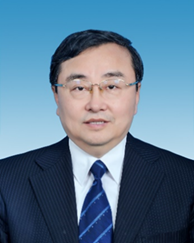 Keynote: AI Impact on Smart Courses and Teaching Models for Software Services Engineering Education
Xiaofei Xu, Professor, Faculty of Computing, Harbin Institute of Technology
Prof. Dr. Xiaofei Xu is a professor in the Faculty of Computing at Harbin Institute of Technology (HIT), China. He was Vice President of HIT and President of the HIT-Weihai campus. He is a Fellow of the China Computer Federation (CCF), Vice Director of the China Ministry of Education University Steering Committee on Software Engineering, and Chairman of the Executive Committee of the Union of MOOC Associations in China. His research interests include service computing, service science and engineering, enterprise computing, software engineering, digital education and metaverse education. He has published over 300 papers in international journals and conferences. He has received many awards, including China National Teaching Achievement Awards, the CCF Outstanding Education Award, the IEEE TCSVC Outstanding Leadership Award and the CCF Life-Time Academic Contribution Award on Service Computing.
SSEedu: IEEE Symposium on Software Services Engineering Education
SSE-SSEedu-S2 · Keynote Speech
14:10 – 15:20
Room: 204
Session Chair: Shijun Liu, Shandong University
 Keynote: The History, Repeating Themes and Future of Computer Science and Software Engineering Education
Carl K. Chang, Professor Emeritus, Iowa State University
Chair Professor (Courtesy Appointment), National Central University in Taiwan
Carl K. Chang is former Chair and Professor Emeritus of Computer Science at Iowa State University and holds a courtesy appointment as Chair Professor at National Central University, Taiwan. His research interests include requirements engineering, situational analytics, software services engineering and smart aging. Chang was the 2004 President of the IEEE Computer Society and previously served as Editor-in-Chief of IEEE Software and IEEE Computer. He has received the Computer Society’s Meritorious Service Award, Outstanding Contribution Award, Golden Core recognition, IEEE Third Millennium Medal and Richard E. Merwin Medal. He served as Steering Committee Chair for the IEEE World Congress on Services from 2017–2022, participated in the inaugural team that developed SWEBOK, and spearheaded the IEEE-CS/ACM Computing Curricula 2001 task force. Chang is a Life Fellow of IEEE, a Fellow of AAAS and a Life Fellow of the European Academy of Sciences.
15:20–15:50 Coffee Break
SSEedu: IEEE Symposium on Software Services Engineering Education
SSE-SSEedu-S3 · Invited Talk Session 1 (3 talks)
15:50 – 17:00
Room: 204
Session Chair: Bo Li, Victoria University, Melbourne, Australia
Research on Modular Teaching for Vocational Needs Based on LDA Topic Analysis
Jingyuan Feng, Xiaomei Yu, Lixiang Zhao, Tingting Zhao, Yingying Ye and Jiachen Zheng
Research on Modular Teaching for Vocational Needs Based on LDA Topic Analysis
Bo Li, Lu Zhao, Wenjie Ye, Sunam Pradhan and Yuan Miao
Exploring an Endless Learning Paradigm Supported by Large Model Services and Educational Agents
Wenxuan Ouyang, Guangxu Mei, Li Pan and Sheharyar Khan
SSEedu: IEEE Symposium on Software Services Engineering Education
SSE-SSEedu-S4 · Keynote Speech
13:00 – 14:10
Room: 204
Session Chair: Zhiying Tu, Harbin Institute of Technology
 Keynote: From Coders to Orchestrators: Educating Software Engineers for the Agentic Era
Amin Beheshti, Macquarie University in Sydney, Australia
Professor Amin Beheshti is a Full Professor of Data Science at Macquarie University in Sydney, Australia. He is Founder and Director of the Centre for Applied Artificial Intelligence, Head of the Data Science Lab, Founder of the Big Data Society at Macquarie University, and Founder and CEO of Collective Learning AI. He received the AI Academic/Researcher of the Year award at the inaugural Australian National AI Awards 2024. He has contributed to more than 70 research projects, secured over $50 million in research funding, and supervised more than 55 research students.
 Keynote: Teaching Feedback Loop Engineering: How Mentees Learn to Assess and Advance Open-Source Projects on the ACMM Scale
Andrew Anderson, Software Architect, IBM Research
Andy Anderson, PhD, is a Software Architect at IBM Research (Hybrid Cloud and AI Platform) and Chief Maintainer of KubeStellar, a CNCF Sandbox project delivering multi-cluster Kubernetes orchestration from cloud to edge. He created the AI Codebase Maturity Model. Under his leadership, the KubeStellar Console has been maintained primarily by AI agents for over 150 days, serving as both a production system and a living laboratory for feedback-loop engineering. He mentors LFX and first-time open-source contributors.
SSEedu: IEEE Symposium on Software Services Engineering Education
SSE-SSEedu-S5 · Panel
14:10 – 15:20
Room: 204
Interactive Panel Discussion: Facing Change: Software Engineering Education in the Era of AI-Driven Software Development
Moderator: Shijun Liu, Shandong University, China
Panelists:
Amin Beheshti, Macquarie University, Australia
Zhiying Tu, Harbin Institute of Technology, China
Stephan Reiff-Marganiec, University of Derby, UK
Yingjie Wang, Yantai University, China
Zhihui Lu, Fudan University, China
15:20–15:50 Coffee Break
SSEedu: IEEE Symposium on Software Services Engineering Education
SSE-SSEedu-S6 · Invited Talk Session 2 (3 talks)
15:50 – 17:00
Room: 204
Session Chair: Guangxu Mei, Shandong University, China
An LLM-enhanced Framework for Assessing Student Knowledge Mastery in Software Engineering Education
Wanchun Dou, Ke Ma and Zheng Li
Multi-Mode Gamified Programming Training and Competition Platform
Hua Zhang, Zihan Li, Hongliang Sun, Bolin Zhang, Dianhui Chu and Zhiying Tu
Micro-lecture Design and Instructional Evaluation Based on Eye-Tracking Technology
Tingting Zhao, Xiaomei Yu, Xiaotong Jiao, Jingyuan Feng, Yingying Ye and Xiangwei Zheng