




CLOUD Keynotes
CLOUD KEYNOTE 1
TBD
Going beyond connectivity services in 6G
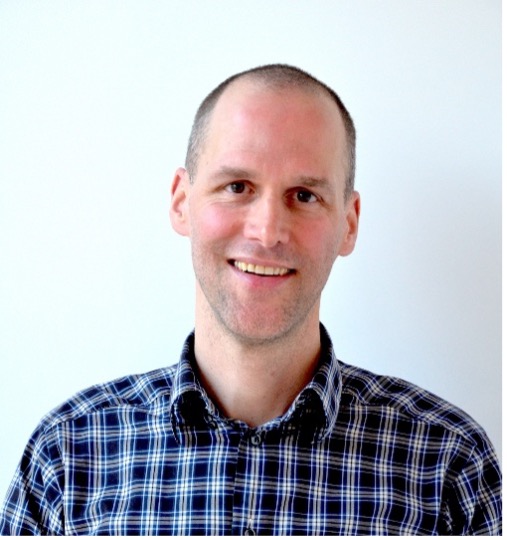
Wolfgang John
Ericsson Research
Abstract
What will future mobile networks look like? Unsurprisingly, 6G networks are set to provide enhancements in classic performance metrics related to connectivity. However, we envision 6G to additionally offer new capabilities and services that go beyond pure connectivity. These services will position 6G as a platform supporting a cyber-physical world, fusing the connected physical world of senses, actions, and experiences with the physical world’s programmable digital representation.
This talk will start by sketching the current 6G vision by deriving an updated set of network capabilities from expected society needs. As the main theme, we want to highlight the role of compute in 6G. This includes compute and AI related services that would be offered by future networks, for instance dynamic device offloading and Edge AI. This talk will summarize our ongoing research, first results, and learnings. By discussing related research directions, we hope to engage the industrial and academic research audience interested in boosting future networks through convergence of compute and communication.
Speaker Biography
Wolfgang John is a Principal Researcher at Ericsson Research in Stockholm. His research focuses on distributed computing and edge system concepts, and currently Wolfgang is leading research activities on compute & AI service offerings as part of 6G networks. Since joining Ericsson in 2011, he has also done research on network function virtualization, software-defined networking and network management. Wolfgang holds a Ph.D. in Computer Engineering from Chalmers University of Technology in Gothenburg, Sweden, and has co-authored numerous scientific papers, reports, and patent families.
COULD KEYNOTE 2
TBD
From Cloud Computing to Software-Defined AI-based Neuromorphic Computing
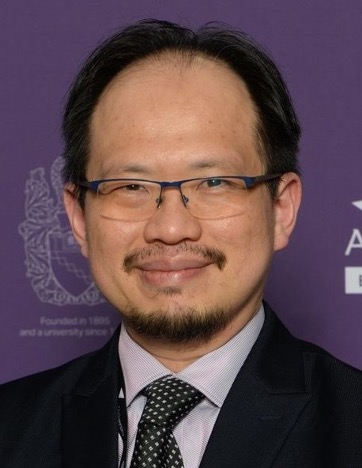
Victor Chang
Aston University
Abstract
The evolution from traditional cloud architectures to brain-inspired neuromorphic systems represents a fundamental shift in computing paradigms. This keynote explores this transformation through advances in cybersecurity, AI, and healthcare applications. Beginning with the multi-layered Cloud Computing Adoption Framework that established secure foundations, we track how edge computing brought intelligence closer to data sources. The talk examines AI-driven healthcare platforms that achieve 90%+ diagnostic accuracy and cybersecurity innovations, including a Deep-IFS fog computing framework that improves threat detection by 25%. We will explore how federated learning techniques secure 6G networks while preserving privacy and how explainable AI builds trust in critical environments. The presentation concludes by examining software-defined neuromorphic computing’s potential to overcome the von Neumann bottleneck, integrating memory with computation to create more efficient, adaptive systems capable of emulating cognitive processes while dramatically reducing energy consumption. Through case studies spanning multiple industries, this keynote demonstrates how neuromorphic computing can revolutionize both cybersecurity approaches and healthcare analytics.
Speaker Biography
Prof. Victor Chang is a Professor of Business Analytics at Aston University and an internationally recognized expert in AI, cybersecurity, and healthcare technologies. He has been involved in projects exceeding £14 million in value, including over £3 million as a PI. His pioneering works on the Cloud Computing Adoption Framework (CCAF), Deep-IFS intrusion detection system, and AI-driven Internet of Medical Things (IoMT) platforms have advanced clinical diagnostics and secure cloud architectures globally. Prof. Chang has delivered over 55 keynotes, published over 300 peer-reviewed papers, and served on editorial boards for several leading IEEE journals, e.g., IEEE TII, TSC, and others, e.g., Information Fusion, Scientific Reports, etc. His solutions have been used by in the UK and Asia, with over 90% healthcare diagnostic accuracy and 99% malware defense in edge environments. As a Fellow of IET, BCS, numerous societies, and a recipient of the 2024 UK Inspirational Individual Award, Data Leader of the Year 2025 (In-House), his leadership in applied AI continues to shape real-world innovation in data science and cyber-physical systems. Some of his projects are available on https://www.youtube.com/@novelresearchandtalks2144/videos.
CLOUD KEYNOTE 3
TBD
Serving Collaborative Edge Computing for Ubiquitous AI
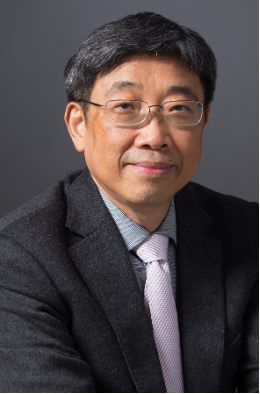
Jiannong Cao
Hong Kong Polytechnic University, China
Abstract
We envision the era of ubiquitous AI in the not-too-distant future, when AI will become commonplace as electricity. Edge computing provides a powerful way to rapidly analyze data and process tasks at the edge of the network, closer to the end-user. Edge AI extends edge computing to enable AI on edge devices to make instantaneous intelligent decisions. In this talk I will present a high performance and scalable edge AI infrastructure, collaborative edge AI (CEAI), where edge nodes share data and compute resources, collaboratively perform tasks and serve AI models to achieve distributed intelligence, making AI accessible everywhere. I will discuss about the challenging issues, including cross-node virtualization, distributed resource management, collaborative task scheduling, conflicting network flows, and distributed machine learning. I will highlight the proposed architecture, methods, and techniques to address the challenging issues and point out the future directions.
Speaker Biography
Dr. Cao is the Otto Poon Charitable Foundation Professor in Data Science, the Chair Professor of Distributed and Mobile Computing and the director of Internet and Mobile Computing Lab in the Department of Computing at The Hong Kong Polytechnic University. He served the department head from 2011 to 2017. Dr. Cao is also the Dean of Graduate School, and director of Research Institute for AIoT at Hong Kong Polytechnic University.
Dr. Cao’s research interests include edge computing and distributed systems, wireless sensing and networking, big data and AI. He published 6 co-authored and 9 co-edited books, and over 500 papers in major international journals and conference proceedings. He also obtained 13 patents. He received many awards for his outstanding research achievements. Dr. Cao served the Chair of the Technical Committee on Distributed Computing of IEEE Computer Society 2012-2014. He is a member of Academia Europaea, a fellow of HK Academy of Engineering, a fellow of IEEE, a fellow of CCF and a distinguished member of ACM.